Coal based Powdered Activated Carbon represents a pinnacle of industrial filtration and purification technology, serving as a critical tool for removing contaminants from liquids and gases. By leveraging the inherent porous structure of coal-derived carbon, this material offers an expansive surface area that enables the efficient adsorption of a wide array of pollutants, from organic chemicals to heavy metals. In an era where environmental regulations are becoming increasingly stringent, understanding the mechanisms and applications of Coal based Powdered Activated Carbon is essential for industries striving for sustainability and operational purity.
Globally, the demand for high-performance adsorbents is driven by the urgent need for clean drinking water and the mitigation of industrial emissions. Coal-based carbons are particularly valued for their mechanical strength and a balanced pore size distribution—comprising micro, meso, and macro-pores—which allows them to target molecules of varying sizes. This versatility makes them indispensable in sectors ranging from municipal water treatment to the high-precision requirements of the pharmaceutical and defense industries.
The strategic importance of this material extends beyond simple filtration; it is a cornerstone of modern environmental remediation. Whether it is removing chlorine from city water supplies or capturing toxic volatile organic compounds (VOCs) from factory exhaust, Coal based Powdered Activated Carbon provides a cost-effective, scalable, and highly reliable solution. By optimizing the activation process of raw coal, manufacturers can tailor the carbon's properties to meet the exact chemical demands of a specific industrial challenge.
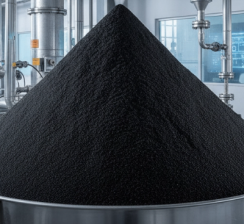
The Industrial Significance of Coal based Powdered Activated Carbon
The industrial significance of Coal based Powdered Activated Carbon lies in its exceptional capacity to act as a molecular sieve. Unlike granular forms, the powdered variety provides a significantly higher external surface area and shorter diffusion paths, which translates to faster adsorption kinetics. This makes it the preferred choice for "batch" treatments where rapid contaminant removal is critical, such as in the decolorization of food products or the emergency treatment of contaminated water sources.
Furthermore, the use of coal as a precursor ensures a consistent and dense internal structure. Through a process of carbonization and subsequent activation—using steam or chemicals—the coal is transformed into a high-porosity material. This process allows manufacturers to control the iodine value (typically ranging from 900 to 1100 mg/g), ensuring that the final product possesses the necessary strength and purity to operate in harsh industrial environments without collapsing.
Technical Specifications and Pore Architecture
The effectiveness of Coal based Powdered Activated Carbon is defined by its precise physical and chemical specifications. Key parameters include particle size distribution, which is often customized (e.g., 820 to 3060 mesh) to balance the speed of adsorption with the ease of subsequent filtration. A smaller particle size increases the available surface area, speeding up the capture of pollutants, while the ash content (typically ≤15%) and moisture (≤5%) are kept low to maximize the active adsorption sites.
Pore architecture is where the true science of coal-based carbon resides. The material features a complex network of micropores (diameter < 2nm) for trapping small molecules and mesopores (2-50nm) that act as transportation highways for larger organic compounds. This hierarchical structure ensures that Coal based Powdered Activated Carbon can simultaneously handle a broad spectrum of contaminants, from simple odors to complex synthetic dyes.
Beyond physical structure, chemical impregnation can be applied to enhance specificity. By treating the carbon with reagents such as KOH, NaOH, or KMnO4, the material is transformed from a general adsorbent into a targeted chemical filter. This allows for the selective removal of acidic gases, ammonia, or carbon monoxide, extending its utility into the defense industry and specialized industrial hygiene applications where safety is non-negotiable.
Mechanisms of Adsorption in Chemical Processing
At the heart of how Coal based Powdered Activated Carbon functions is the process of physisorption, where molecules are attracted to the carbon surface by Van der Waals forces. This non-specific attraction allows the carbon to "pull" organic impurities out of a solvent or air stream and lock them within its pore network, effectively purifying the primary medium.
In more complex chemical processing, Coal based Powdered Activated Carbon often facilitates chemisorption, where a chemical bond is formed between the adsorbent and the adsorbate. This is particularly crucial when the carbon is used as a catalyst carrier for phosgene or sulfuryl chloride synthesis, where the high surface area provides the ideal environment for reaction catalysts to operate efficiently.
The efficiency of this mechanism is heavily dependent on the CTC (Carbon Tetrachloride) value, which measures the volume of pores available for adsorption. With CTC values typically between 50% and 90%, Coal based Powdered Activated Carbon ensures that the maximum possible amount of contaminant is captured per gram of material, reducing the frequency of replacement and lowering operational costs.
Comparative Performance Across Industry Standards
When evaluating Coal based Powdered Activated Carbon against alternative adsorbents like coconut shell or wood-based carbons, the coal-based variant often leads in terms of versatility and mechanical hardness. While coconut shells excel in microporosity for water filtration, coal-based carbons provide a more comprehensive pore range, making them superior for air purification and the removal of larger organic molecules in industrial metallurgy.
The performance of these materials is typically measured by their ability to maintain structural integrity under pressure and their capacity to adsorb specific target toxins. For instance, in the purification of rare metals like palladium or uranium, the high hardness (≥90%) of coal-based carbon prevents the material from crumbling, which would otherwise contaminate the purified product with carbon fines.
Comparative Efficiency of Coal based Powdered Activated Carbon Variants
Global Applications in Environmental Protection
In the realm of environmental protection, Coal based Powdered Activated Carbon is used extensively in wastewater treatment plants to remove dissolved organic pollutants and endocrine disruptors that biological treatments cannot handle. In regions facing industrial runoff challenges, such as the heavy industrial zones of Southeast Asia and Eastern Europe, the rapid deployment of powdered carbon in dosing systems allows plants to react quickly to spikes in pollutant concentrations.
Beyond water, this material is a lifeline in industrial hygiene and the defense sector. By impregnating Coal based Powdered Activated Carbon with specific reagents, it is used in gas masks and air scrubbing systems to protect personnel from acidic gases and ammonia. This application demonstrates the material's transition from a simple filter to a critical safety component in hazardous environments.
Long-Term Value and Sustainability Benefits
The long-term value of adopting Coal based Powdered Activated Carbon lies in its reliability and cost-efficiency. For large-scale industrial operations, the ability to customize specifications means that companies can optimize their dosage, reducing waste and lowering the total cost of ownership. The material's robustness ensures that it remains effective even under fluctuating temperatures and pressures, providing a level of stability that is crucial for continuous production lines.
From a sustainability perspective, the high adsorption capacity of coal-based carbon reduces the volume of waste material generated over time. Moreover, innovations in thermal regeneration are allowing used carbons to be reactivated, creating a circular economy loop that minimizes the environmental footprint of the filtration process. This transition toward regenerable carbon underscores the commitment to sustainable industrial chemistry.
Ultimately, the use of this material fosters trust and safety. In the pharmaceutical and food industries, the assurance that trace contaminants have been removed to parts-per-billion levels is what ensures consumer safety and regulatory compliance. The emotional peace of mind provided by high-purity filtration is as valuable as the technical performance itself.
Future Innovations in Carbon Activation Technology
The future of Coal based Powdered Activated Carbon is being shaped by the integration of nanotechnology and green chemistry. Researchers are currently exploring "templated carbonization," where specific polymers are used to create perfectly uniform pore sizes, eliminating the randomness of traditional activation. This would allow for the creation of "smart" carbons that can target a single specific molecule while ignoring all others, drastically increasing efficiency.
Digital transformation is also playing a role through the use of AI-driven molecular modeling. By simulating the interaction between Coal based Powdered Activated Carbon and various pollutants, manufacturers can now design the ideal carbon structure in a virtual environment before moving to physical production. This reduces the R&D cycle and allows for the rapid creation of custom-tailored adsorbents for emerging pollutants like PFAS (per- and polyfluoroalkyl substances).
Furthermore, the move toward carbon-neutral production is driving the adoption of bio-based additives in the activation process. By combining coal precursors with renewable organic activators, the industry is working toward a lower-carbon footprint for the production of the carbon itself. This ensures that the tools we use to clean the environment are not themselves contributing to its degradation.
Performance Analysis of Coal based Powdered Activated Carbon Applications
| Application Sector | Primary Target Pollutant | Critical Spec Requirement | Efficiency Rating (1-10) |
|---|
| Municipal Water | Chlorine & Organic Odors | Iodine Value > 1000mg/g | 9.5 |
| Defense Industry | Ammonia & Acidic Gases | Impregnated with KOH/KMnO4 | 9.8 |
| Metallurgy | Rare Metal Impurities | Hardness ≥ 95% | 8.7 |
| Chemical Synthesis | Catalyst Residues | Low Ash Content ≤ 10% | 9.0 |
| Food Processing | Coloring Agents/Toxins | Particle Size 200-400 mesh | 8.2 |
| Air Scrubbing | VOCs & Solvents | High CTC Value > 60% | 9.3 |
FAQS
The primary advantage is the surface area and kinetics. Because the carbon is powdered, the distance a contaminant molecule must travel to reach an adsorption site is significantly shorter than in a granular pellet. This results in much faster adsorption rates, making it ideal for batch processing or emergency water treatment where immediate results are required.
Yes, specifications are highly customizable. Depending on the application, manufacturers can adjust the particle size (mesh), iodine value, and CTC percentage. Furthermore, the carbon can be impregnated with specific chemical reagents like KOH or H3PO4 to target particular hazardous gases, making it a versatile tool for specialized industrial needs.
Ash consists of non-carbon mineral residues. A high ash content can block the micropores of the carbon, reducing the total available surface area for adsorption. By keeping ash levels low (typically ≤15%), Coal based Powdered Activated Carbon ensures maximum efficiency and prevents the leaching of minerals back into the treated medium.
Absolutely. When produced to food-grade standards, coal-based activated carbon is widely used for decolorization and purification in the food industry. Its ability to remove organic impurities without altering the taste or chemical composition of the product makes it a global standard for refining oils, sugars, and beverages.
The Iodine Value is a standard measure of the microporosity of the carbon. A higher iodine value (e.g., 900-1100 mg/g) indicates a greater number of small pores, which means the carbon has a higher capacity to adsorb small organic molecules. It is essentially a proxy for the "strength" of the carbon's adsorption capability.
It should be stored in a cool, dry, and well-ventilated area, away from strong oxidizing agents. Since activated carbon is naturally porous, it can absorb moisture and odors from the surrounding air, which can "pre-fill" the pores and reduce its effectiveness. Using airtight packaging like jumbo bags or 25kg sealed bags is highly recommended.
Conclusion
In summary, Coal based Powdered Activated Carbon is a fundamental component of modern industrial purification, offering a unique combination of rapid kinetics, structural durability, and chemical versatility. From its role in protecting personnel in the defense industry to its capacity for cleaning municipal water supplies and refining precious metals, its impact on environmental health and industrial efficiency is profound. By optimizing parameters such as the iodine value, CTC, and particle size, industries can achieve unparalleled levels of purity and safety.
Looking forward, the evolution of this material toward "smart" carbons and sustainable production methods will only increase its value. As global regulations on pollutants like VOCs and PFAS tighten, the reliance on high-performance adsorbents will grow. We encourage industrial operators and environmental engineers to invest in high-specification carbon solutions to future-proof their operations and contribute to a cleaner, safer planet. Visit our website for more professional solutions: www.lycarbongroup.com


